

Loading...
Hi, How Can We Help You?

Category Archives: Student Visa

September 20, 2026
September 20, 2026

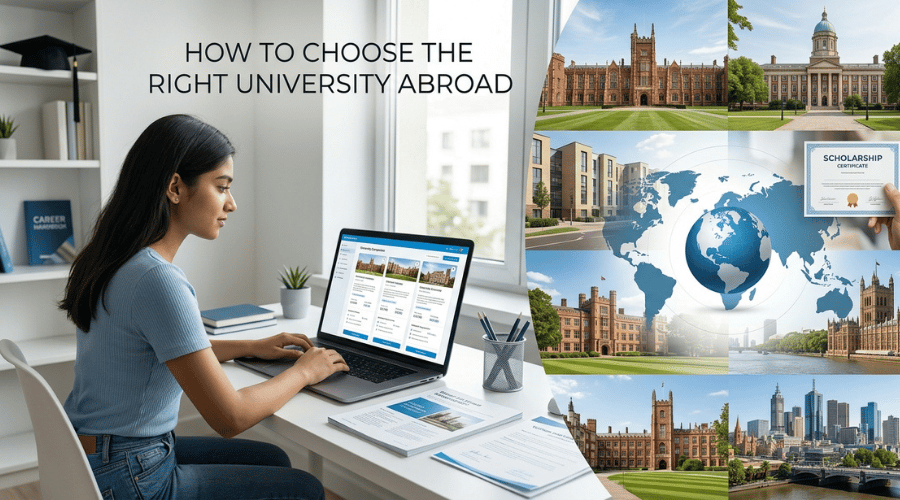
Choosing a university abroad is one of the biggest decisions you will make as an international student. With thousands of universities, hundreds of programs, different tuition fees, admission requirements, locations, and career opportunities, finding the right option can feel overwhelming.

But choosing a university is not simply about finding the highest-ranked institution or the most popular destination. The right university should match your academic goals, budget, career plans, preferred lifestyle, and future ambitions.

In this guide, SchoolingVisa explains the key factors you should consider before choosing a university abroad.

1. Start With Your Study Goals

Before searching for universities, first understand what you want to study and why.

Ask yourself:

  • What subject or degree do I want to pursue?
  • Which specialization interests me?
  • What career do I want after graduation?
  • Do I need a bachelor’s, master’s, or doctoral degree?
  • Do I want an academic or career-focused program?

For example, if you are interested in business, you may find programs in Business Administration, Finance, Marketing, International Business, or Management.

Similarly, students interested in technology can explore Computer Science, Artificial Intelligence, Data Science, Cybersecurity, Software Engineering, and related fields.

Having a clear academic direction will make your university search much easier.

2. Check the University and Program Ranking

University rankings can be useful when comparing institutions, but they should not be the only factor in your decision.

Look at both:

  • Overall university ranking
  • Subject or program ranking

For example, one university may have a particularly strong engineering department while another may be better known for business, law, medicine, or computer science.

So instead of asking only, “What is the university’s ranking?”, also ask:

“How strong is this university in the subject I want to study?”

3. Compare Tuition Fees

Budget is one of the most important considerations for international students.

University tuition fees can vary significantly depending on:

  • Country
  • University
  • Degree level
  • Program
  • Duration of study
  • Public or private institution
  • International student status

Don’t look only at the annual tuition fee. Calculate the estimated total cost of your degree.

For example:

Annual tuition × number of study years = estimated tuition cost

Then add other expenses such as accommodation, food, transportation, health insurance, study materials, and other living costs.

A university with slightly higher tuition may sometimes have a shorter program, while a lower annual tuition fee may not necessarily mean a lower total cost.

4. Calculate the Cost of Living

Tuition is only part of your study-abroad budget.

Your living expenses can include:

  • Accommodation
  • Food
  • Transportation
  • Health insurance
  • Mobile and internet
  • Books and study materials
  • Personal expenses

The cost of living can also vary significantly between cities.

For example, studying in a major international city may provide excellent career and cultural opportunities but may also involve higher accommodation and living costs.

Before selecting a university, research the city as well as the university.

5. Check Admission Requirements

Every university and program can have different admission requirements.

These may include:

  • Academic certificates and transcripts
  • English-language proficiency
  • IELTS, TOEFL, or other accepted tests
  • GRE or GMAT for selected programs
  • Statement of Purpose
  • Letters of recommendation
  • CV or resume
  • Portfolio for certain subjects
  • Work experience for some programs

Make a checklist of the requirements for every university you are considering.

This will help you identify which universities match your academic background and whether you need to complete any additional requirements before applying.

6. Consider the Location

Where you study can have a major impact on your international student experience.

Consider:

  • Weather and climate
  • City size
  • Public transportation
  • Safety
  • Accommodation availability
  • Cultural environment
  • Student community
  • Distance from major airports
  • Employment opportunities
  • Access to internships

Think about the type of environment where you would feel comfortable living for several years.

A university can have an excellent academic reputation, but the location should also fit your personal and practical needs.

7. Look at Career and Employment Opportunities

Your university experience should support your long-term career goals.

Research whether the university provides:

  • Internship opportunities
  • Career counseling
  • Industry partnerships
  • Career fairs
  • Placement support
  • Work-integrated learning
  • Alumni networks
  • Opportunities to gain practical experience

Also research the employment environment in your chosen field and destination country.

If your goal is to build an international career, understanding what happens after graduation is just as important as choosing where to study.

8. Explore Scholarships and Financial Aid

Don’t assume that studying abroad is only possible if you can pay the full cost yourself.

Many universities and organizations offer different types of financial support, including:

  • Merit-based scholarships
  • University scholarships
  • Need-based financial assistance
  • Research funding
  • Tuition discounts
  • Government scholarships
  • Program-specific awards

Scholarship eligibility can depend on academic performance, nationality, program, extracurricular achievements, financial circumstances, and other criteria.

Always check the official scholarship requirements and deadlines before applying.

9. Check the University’s International Student Support

Moving to another country can be a major adjustment.

A university with strong international student support can make the transition easier.

Look for services such as:

  • International student orientation
  • Academic advising
  • Accommodation support
  • Visa and immigration guidance
  • Student counseling
  • Language support
  • International student clubs
  • Career services

These services can be especially valuable during your first year abroad.

10. Research the Campus and Student Life

Your university experience is about more than classrooms and exams.

Research the campus environment and student activities.

Look for:

  • Student clubs
  • Sports facilities
  • Libraries
  • Laboratories
  • Research centers
  • Student organizations
  • Cultural activities
  • International communities
  • Campus events

If possible, explore virtual campus tours, university videos, student reviews, and official university information before making your decision.

11. Check the Program Curriculum Carefully

Two universities may offer the same degree title but have very different course structures.

Don’t choose a program based only on its name.

Look at:

  • Core subjects
  • Elective courses
  • Specializations
  • Practical projects
  • Internship opportunities
  • Research opportunities
  • Laboratory facilities
  • Industry-based learning
  • Final-year projects

Read the curriculum carefully and ask yourself:

“Will this program teach me the knowledge and skills I need for my future career?”

12. Consider the University’s Accreditation

Accreditation is another important factor.

Make sure the university and your chosen program are properly recognized by the relevant authorities or professional bodies where applicable.

This can be particularly important for regulated professions such as medicine, nursing, engineering, education, law, and other specialized fields.

Before applying, verify accreditation and recognition information through reliable official sources.

13. Think About Your Long-Term Plans

Your university choice should fit into your bigger plan.

Ask yourself:

Where do I want to be after graduation?

Your goals may include:

  • Returning to your home country
  • Building international work experience
  • Continuing to postgraduate study
  • Working in a particular industry
  • Starting a business
  • Developing an international career

Your preferred university and destination may change depending on these goals.

14. Create a University Shortlist

Instead of applying randomly, create a structured shortlist.

You can divide universities into three categories:

Reach Universities

These are universities where admission may be more competitive based on your academic profile and program requirements.

Match Universities

These are universities where your academic profile generally aligns with the published admission requirements.

Safer Options

These are universities where your academic profile appears to meet or exceed the published requirements, while still considering all other admission conditions.

This approach can help you create a more balanced application strategy.

15. Compare Universities Before Making Your Final Decision

Once you have shortlisted several universities, create a comparison table.

Factor University A University B University C
Program
Tuition Fee Compare Compare Compare
Living Cost Compare Compare Compare
Admission Requirements Check Check Check
Scholarship Check Check Check
Location Compare Compare Compare
Career Opportunities Research Research Research
Student Support Check Check Check
Program Curriculum Compare Compare Compare

This makes it easier to see the differences between your options and identify which universities fit your personal requirements.

The Right University Is Different for Every Student

There is no single university that is perfect for every international student.

The right choice depends on your academic profile, chosen subject, financial situation, career goals, preferred destination, and personal priorities.

Instead of choosing a university only because it has a famous name or a high ranking, take the time to look at the complete picture.

A university that fits your goals and circumstances can be a much more meaningful choice than one selected purely because of its ranking.

Final Checklist Before Applying

Before submitting your application, make sure you have checked:

✓ University reputation and relevant rankings
✓ Program curriculum
✓ Tuition fees
✓ Estimated living expenses
✓ Admission requirements
✓ English-language requirements
✓ Scholarship opportunities
✓ Location and accommodation
✓ Career and internship opportunities
✓ International student support
✓ Accreditation and recognition
✓ Application deadlines
✓ Your long-term career plans

Planning to Study Abroad?

Choosing a university is an important step toward your international education journey, and proper planning can help you make a more informed decision.

At SchoolingVisa, we help students explore study-abroad opportunities and understand important factors such as university selection, programs, admission requirements, and the application process.

If you’re planning to study abroad and don’t know where to start, start by understanding your goals first — then find the university that matches them.
Read More

March 9, 2025

Thailand is quickly becoming a preferred destination for international students due to its high-quality education, affordable tuition fees, and vibrant culture. One of the best opportunities for students looking to study in Thailand is the availability of scholarships that do not require IELTS or TOEFL. These scholarships are open to students from around the world who wish to pursue undergraduate, postgraduate, or PhD programs in various fields.

Benefits of Studying in Thailand with a Scholarship

Students selected for these scholarships can enjoy numerous benefits, including:

  • Full or partial tuition fee waivers
  • Monthly stipends for living expenses
  • Accommodation support
  • Health insurance coverage
  • Research and conference funding (for postgraduate and PhD students)

Top Universities Offering Scholarships Without IELTS or TOEFL

Several universities in Thailand offer scholarships without requiring English proficiency tests, including:

  • Chulalongkorn University
  • Thammasat University
  • Mahidol University
  • Asian Institute of Technology (AIT)
  • Prince of Songkla University

Eligibility Criteria

Although requirements vary by university and program, common criteria include:

  • Applicants must be international students.
  • A strong academic record and relevant extracurricular achievements.
  • English proficiency can be demonstrated through previous education in English or an alternative proficiency certificate from the applicant’s institution.

Fields of Study

Scholarships are available in a variety of disciplines, including:

  • Business and Management
  • Engineering and Technology
  • Social Sciences
  • Law and Political Science
  • Medicine and Public Health
  • Science and Innovation
  • Humanities and Arts

Required Documents

Applicants generally need to submit:

  • Updated CV
  • Degree certificates and transcripts
  • Statement of Purpose (SOP)
  • Two letters of recommendation
  • Proof of English proficiency (if available)

How to Apply

Interested candidates must apply online through the respective university’s official website. Each university has its own application portal, so students should carefully check deadlines and application procedures.

Application Deadlines

Deadlines vary by university, but most scholarships for the Fall 2025 intake close between June and August 2025.

If you’re looking for an excellent study abroad opportunity in Thailand without the requirement of IELTS or TOEFL, explore these scholarships and apply before the deadline!
Read More

March 9, 2025

Turkey has become a popular study destination for many international students, including Bangladesh students. The country offers a variety of scholarships to help students achieve their academic goals. One of the most prestigious scholarships available is the Bilkent University International Scholarship, which provides full financial support for students pursuing undergraduate, postgraduate, and PhD degrees.

The application process for the Fall 2025-26 academic year has already begun, and students from any country can apply online. This fully funded scholarship offers numerous benefits, making it an excellent opportunity for students seeking quality education in Turkey.

Benefits of the Bilkent University Scholarship

Students selected for the Bilkent University International Scholarship will receive:

  • Full tuition fee waiver
  • Monthly stipend and housing allowance of 4,500 Turkish Liras
  • Health insurance coverage
  • A laptop for academic use
  • Meal card for campus dining
  • Travel support to attend scientific events

Fields of Study

The scholarship covers various disciplines, including:

  • Applied Technology
  • Management
  • Economics
  • Social Sciences
  • Design and Architecture
  • Engineering
  • Business Administration
  • Science
  • Music and Performing Arts
  • Graduate School of Social Sciences
  • Graduate School of Education

Eligibility Criteria

Applicants must meet the following requirements:

  • Citizens of any country, including Turkish nationals, can apply.
  • Minimum CGPA of 2.80 for undergraduate and postgraduate applicants.
  • English proficiency is required, with a minimum IELTS score of 6.5.

Required Documents

Applicants must submit the following documents:

  • Updated CV
  • All degree certificates
  • Official transcripts
  • Statement of purpose
  • Two letters of recommendation

Application Process

Interested candidates must apply online. More details regarding the application process and scholarship information can be found on the Bilkent University website.

Application Deadline

The last date to apply for this scholarship is 13 July 2025.

If you are looking for a fully funded opportunity to study in Turkey, don’t miss this chance to apply for the Bilkent University Scholarship. Start preparing your documents and submit your application before the deadline!
Read More

January 7, 2025

If you’re planning to apply for an Australian student visa in 2025 while already in Australia, there are some significant changes you need to be aware of. Starting January 1, 2025, the Australian Department of Home Affairs will no longer accept “Letters of Offer” from educational institutions as part of your visa application. Instead, you will be required to submit a Confirmation of Enrolment (CoE) at the time of your application.

What Is a Confirmation of Enrolment (CoE)?

A Confirmation of Enrolment (CoE) is an official document issued by the educational institution in which you’ve been accepted. It confirms that you have been enrolled in a course, and that you have met the conditions for enrollment. The CoE includes essential details like your course name, duration, and the institution offering the course. Unlike a “Letter of Offer,” which is a preliminary acceptance document, the CoE confirms that you are fully registered and eligible to begin your studies.

Why the Change?

The main reason for this change is to ensure that only students with confirmed enrollment can apply for a student visa. Previously, the “Letter of Offer” merely showed that an institution had accepted a student but did not guarantee that the student had actually enrolled and met all necessary prerequisites. By requiring a CoE, the Department of Home Affairs ensures that applicants are committed to their courses and ready to study.

What Does This Mean for You?

As a prospective student in Australia, you will need to take the following steps:

  1. Apply and Get Accepted: You must first apply to an educational institution in Australia and meet the admission requirements.
  2. Receive Your CoE: Once your enrollment is confirmed, the institution will issue you a Confirmation of Enrolment.
  3. Submit Your CoE with Your Visa Application: When applying for your student visa, you must submit your CoE as part of your application package.

Without a CoE, your student visa application will not be processed. This makes it more crucial than ever to ensure that you complete your enrollment as soon as possible to avoid any delays in your visa application.

The Key Difference Between a Letter of Offer and a CoE

Letter of Offer:

  • A preliminary acceptance document.
  • Shows that you’ve been offered a place in a course, but it doesn’t guarantee enrollment.
  • Previously used for student visa applications.

Confirmation of Enrolment (CoE):

  • An official document that confirms you are enrolled in a course.
  • It verifies that you have met all the necessary requirements and are ready to study.
  • Required for student visa applications starting January 2025.

How to Get Your CoE?

  1. Apply to a course: First, you need to apply to an Australian institution and meet the entry requirements for your chosen course.
  2. Meet enrollment conditions: Once accepted, ensure you meet any conditions specified for your enrollment (like paying tuition fees or providing additional documents).
  3. Receive your CoE: After meeting the necessary conditions, your institution will issue the CoE, which confirms your enrollment.
  4. Submit the CoE with your visa application: You’ll need to include this document when applying for your student visa.

What If You Don’t Have a CoE?

Without a Confirmation of Enrolment (CoE), your student visa application will not be considered. This makes it vital for applicants to secure their CoE before applying for a visa. Ensure that you communicate with your educational institution to understand their process and timelines for issuing a CoE.

Who Does This Apply To?

This rule change applies to applicants who are already in Australia and applying for a student visa. If you’re applying from outside Australia (offshore applicants), the previous rules will still apply, meaning a Letter of Offer will be sufficient for your visa application.

What Does This Mean for the Visa Process?

  1. Faster processing: Since the CoE is an official confirmation of enrollment, it simplifies the visa application process and reduces the chances of delays.
  2. More accurate applications: By requiring a CoE, the process ensures that only students who are confirmed and ready to study are applying for student visas, reducing the risk of fraudulent or incomplete applications.

Final Thoughts

If you’re planning to apply for an Australian student visa in 2025, make sure you understand this new requirement. Getting your Confirmation of Enrolment (CoE) should be a priority once you receive an offer to study. By following this process, you’ll not only ensure your student visa application is complete but also avoid any unnecessary delays in your immigration process.

Be proactive, stay in touch with your chosen institution, and make sure all your enrollment conditions are met to get your CoE and successfully apply for your student visa to study in Australia!
Read More

November 10, 2024
November 10, 2024

Canada’s Student Direct Stream (SDS) has been a popular pathway for international students seeking a faster, more streamlined study permit process. With quicker processing times and simplified requirements, SDS has helped thousands of students from eligible countries pursue their educational goals in Canada. But now, imagine a scenario where SDS is no longer available. What would that mean for aspiring students?

In this blog post, we’ll explore the potential impact of the end of the SDS program, how it could affect future international students, and what alternative options students might consider if this streamlined pathway were to be discontinued.

What is SDS, and Why Has It Been Popular?

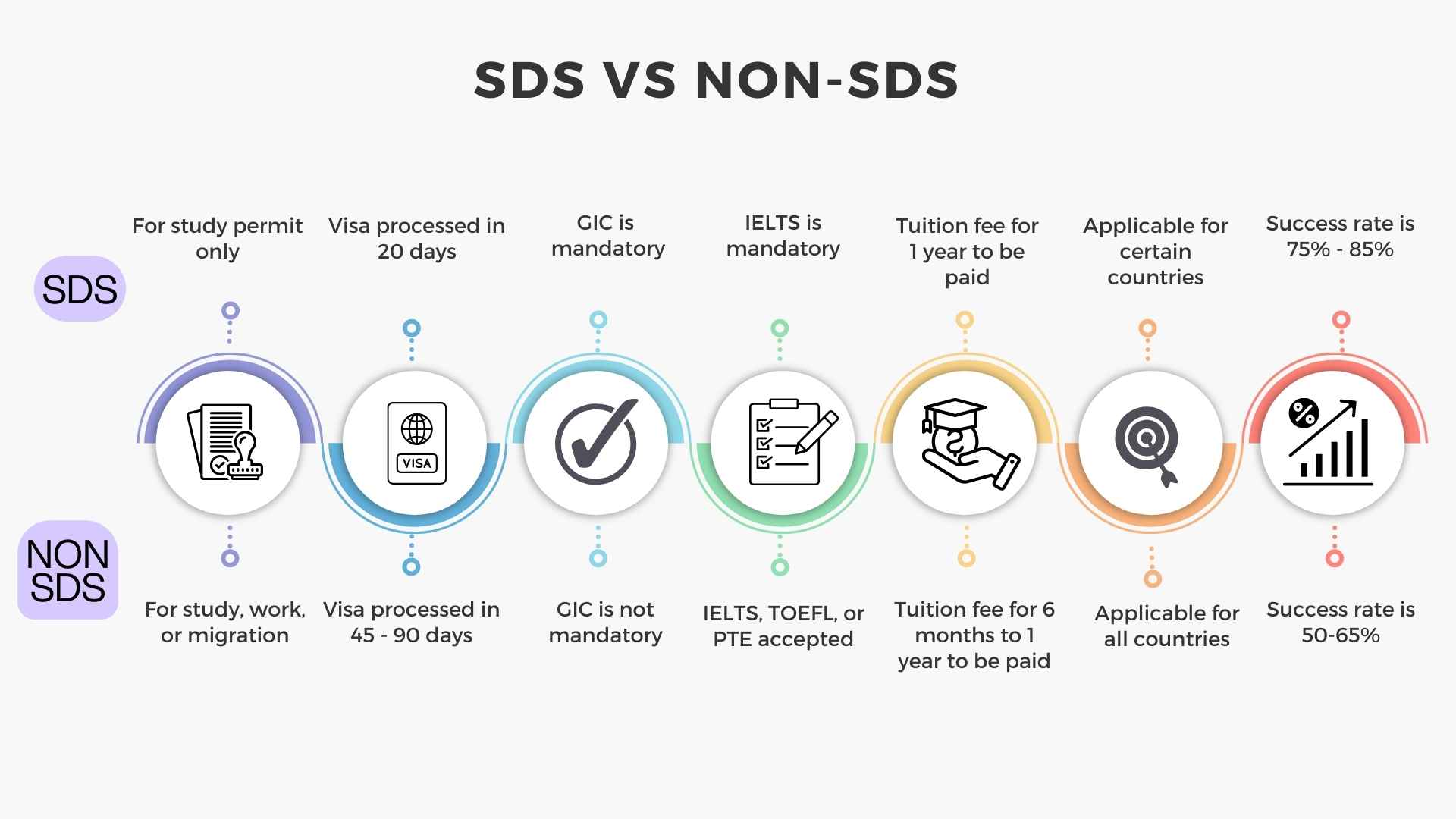
The Student Direct Stream (SDS) program was introduced by Immigration, Refugees and Citizenship Canada (IRCC) as a way to expedite the study permit process for students from select countries. By meeting certain financial and academic requirements up front, eligible students could enjoy processing times as short as 20 days, compared to the longer wait times for standard study permit applications.

SDS has been available to students from countries such as India, China, the Philippines, Vietnam, Pakistan, Brazil, and several others. Key benefits included:

  1. Faster Processing Times: SDS applications were prioritized, giving students peace of mind with shorter waiting periods.
  2. Simplified Requirements: By demonstrating adequate financial readiness and language proficiency, students could minimize the need for extensive documentation.
  3. Certainty in Planning: With a faster timeline, students could better coordinate their travel, accommodation, and enrollment without facing delays.

Compare Between SDS and Non-SDS visa processes

The Potential End of SDS: What It Means for Future Students

While SDS has been a vital program, imagine if IRCC were to end the stream. This would impact both prospective international students and Canadian institutions. Here’s what it could mean:

1. Longer Processing Times

Without SDS, students would need to rely solely on the standard study permit process, which could mean longer wait times. Processing a non-SDS application can take anywhere from several weeks to a few months, depending on the country and season. This delay could impact students’ ability to begin their programs on time, especially if they’re applying close to the start date.

2. Increased Documentation Requirements

SDS helped simplify the application process by requiring a Guaranteed Investment Certificate (GIC) and proof of payment for the first year’s tuition. If the SDS were discontinued, students might face additional financial documentation requirements. This could complicate the application process, making it more time-consuming and potentially stressful for students who would need to gather multiple bank statements or financial affidavits.

3. Uncertainty and Planning Challenges

One of the biggest advantages of SDS was the ability to plan confidently. Students could apply knowing they would likely receive a response within 20 days. The end of SDS could bring uncertainty, especially for students who need to arrange accommodation, book flights, and plan their finances. They may need to start the process even earlier to ensure they have enough time to receive their permit before their program begins.

4. Potential Impact on Canadian Universities and Colleges

Canadian institutions have become increasingly reliant on international students, and SDS was a critical tool for attracting students from high-demand regions. The end of SDS could make Canada a less attractive option for some students, as competing countries (like the UK and Australia) offer similar expedited pathways. Canadian universities and colleges might see a dip in applications from certain regions, especially if students opt for countries with faster and more predictable visa processes.

Why Might Canada End SDS? Hypothetical Scenarios

It’s worth noting that SDS has been effective for both Canada and international students, so the reasons for ending it would need to be compelling. Some possible reasons could include:

  • Policy Shift Towards Equal Processing: IRCC might decide to prioritize all applications equally instead of offering expedited services to specific countries.
  • Concerns About Fraud or Misuse: If there were significant concerns about misuse of the SDS system or fraudulent documents, Canada might consider ending the program to strengthen immigration controls.
  • Resource Allocation: The cost and resources needed to maintain SDS might be redirected toward other immigration initiatives, especially if IRCC believes the standard application process is sufficient for processing study permits.

Alternative Options for Students if SDS Were to End

While the end of SDS would indeed make things more challenging, students would still have pathways to study in Canada. Here’s what prospective students can do to improve their chances:

1. Apply as Early as Possible

With potentially longer processing times, students should apply well in advance of their program start date. Starting the application process 6–12 months in advance can help reduce stress and ensure that delays don’t impact their studies.

2. Focus on Comprehensive Documentation

Without SDS, students might need to provide more extensive documentation to prove financial stability. Be prepared to submit detailed bank statements, financial affidavits, or proof of parental or sponsor support to satisfy the requirements for a non-SDS application.

3. Consider Alternative Study Destinations

If Canada’s processing times and requirements become too challenging, some students may explore studying in other countries with similar quality education systems, like the United Kingdom, Australia, or the United States, each of which has its own fast-track visa processes.

4. Stay Updated with IRCC Announcements

The rules and requirements for Canadian immigration can change. Students should keep an eye on updates from IRCC and consult with authorized immigration advisors to understand the latest requirements and any new programs that may be introduced to replace SDS.

5. Leverage Canadian Embassy Support

In some cases, Canadian embassies or consulates offer information sessions or resources to help international students with their applications. Attending these events can provide valuable insights and ensure that you understand what is needed for a successful application.

Conclusion

While the end of Canada’s Student Direct Stream (SDS) is a hypothetical scenario, it raises important considerations for both international students and Canadian institutions. SDS has been a valuable tool in helping students from select countries access Canadian education quickly and efficiently. Losing this program would mean adjusting to new processes, potentially with longer wait times and increased documentation requirements.

International students dreaming of studying in Canada should stay proactive, apply early, and be prepared with all necessary documents to ensure a smooth application experience. If Canada does choose to discontinue SDS, it’s likely that IRCC will explore other options to keep Canada competitive in the global education landscape.

Canada remains a top destination for international students, offering world-class education, a high quality of life, and opportunities for work and residency. Even without SDS, Canada will continue to welcome students from around the world—though it may require a bit more patience and preparation along the way.
Read More

February 20, 2024
February 20, 2024

Canada’s strong economy and progressive immigration policies have created a dynamic job market that attracts talent from around the globe. With industries evolving rapidly, there’s an ever-growing demand for skilled workers in various fields. If you’re planning a career move or looking to immigrate to Canada, here are the Top 10 Most In-Demand Jobs in Canada for 2024 and beyond.

1. Software Developers

Canada is a tech hub, with cities like Toronto, Vancouver, and Montreal leading the charge. Companies are consistently seeking software developers to create and maintain cutting-edge applications. Proficiency in coding languages such as Java, Python, and C++ is a significant asset.

Why it’s in demand:

  • Growth in tech startups
  • Expansion of remote work opportunities
  • Increased reliance on digital solutions

Average Salary: $75,000–$120,000/year

2. Registered Nurses

Healthcare professionals, particularly registered nurses (RNs), are in high demand across the country. Aging populations and expanded healthcare services have led to significant job openings in this sector.

Why it’s in demand:

  • An aging population requiring more healthcare services
  • Post-pandemic recovery

Average Salary: $70,000–$95,000/year

3. Construction Managers

Canada’s booming real estate and infrastructure projects have fueled the need for experienced construction managers. From urban development to renewable energy projects, the construction industry is thriving.

Why it’s in demand:

  • Ongoing residential and commercial construction projects
  • Government investment in infrastructure

Average Salary: $80,000–$120,000/year

4. IT Project Managers

As businesses continue to integrate technology, IT project managers are vital for planning and implementing digital projects efficiently.

Why it’s in demand:

  • Increasing reliance on tech in all industries
  • Demand for efficient project management

Average Salary: $85,000–$125,000/year

5. Electricians

With advancements in renewable energy and an increased focus on green infrastructure, electricians are more in demand than ever.

Why it’s in demand:

  • Transition to sustainable energy systems
  • New commercial and residential projects

Average Salary: $60,000–$90,000/year

6. Marketing Specialists

Businesses are leaning heavily on marketing experts to help them stand out in a competitive market. Skills in digital marketing, SEO, and data analytics are especially valued.

Why it’s in demand:

  • Growth of e-commerce
  • Increased competition among businesses

Average Salary: $50,000–$90,000/year

7. Welders

Skilled tradespeople like welders are consistently in demand, particularly in construction, manufacturing, and shipbuilding industries.

Why it’s in demand:

  • Canada’s focus on large-scale industrial projects
  • Shortage of skilled trade workers

Average Salary: $50,000–$75,000/year

8. Accountants

The need for financial expertise remains high as businesses seek to navigate complex tax laws, manage budgets, and plan strategically.

Why it’s in demand:

  • Increased entrepreneurship
  • Complex regulatory environment

Average Salary: $60,000–$100,000/year

9. Truck Drivers

The logistics and transportation industry forms the backbone of Canada’s economy. Truck drivers are critical for maintaining supply chains, and the sector faces a significant shortage of skilled drivers.

Why it’s in demand:

  • Rise in e-commerce
  • Retirements in the current workforce

Average Salary: $55,000–$75,000/year

10. Early Childhood Educators

With growing awareness of the importance of early education and supportive family policies, early childhood educators are essential in creating a strong foundation for children.

Why it’s in demand:

  • Growing number of young families
  • Government funding for childcare programs

Average Salary: $40,000–$60,000/year

Final Thoughts

Whether you’re a Canadian resident considering a career shift or a skilled worker planning to move, aligning your expertise with these in-demand roles can open up exciting opportunities. Many of these professions offer pathways to permanent residency, making them even more appealing for immigrants.

Which of these roles aligns with your skills and aspirations? Start planning now to secure your future in Canada’s thriving job market!

(more…)