

Loading...
Hi, How Can We Help You?

Category Archives: News

October 19, 2026

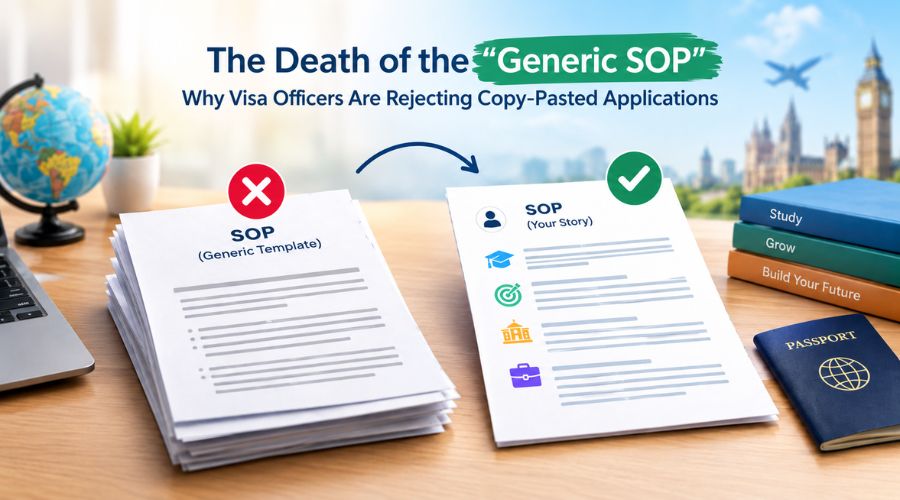
A strong Statement of Purpose is more than a formal document. It is an opportunity to explain your academic journey, your reasons for choosing a particular university, and how studying abroad fits into your future plans. Yet many applicants still submit nearly identical SOPs filled with impressive-sounding statements that reveal very little about their actual circumstances.

For international students, this approach can create serious problems.

A Statement of Purpose (SOP), study plan, or letter of explanation may help an immigration officer understand why an applicant wants to study in a particular country. However, when an application relies on generic paragraphs, unsupported claims, or information that contradicts other documents, it may fail to explain the applicant’s individual circumstances convincingly.

Using a template is not necessarily a problem. The real issue is failing to personalize it to your academic background, chosen course, financial situation, and career plans.

A generic SOP may leave important questions unanswered, especially when its claims do not match the supporting documents. A convincing application should be personal, consistent, and supported by credible evidence.

In this guide, we explore why generic SOPs can weaken student visa applications and how to write a more authentic, compelling statement.

What Is a Generic SOP?

A generic SOP is a statement that uses broad, repetitive language without adequately explaining an individual applicant’s reasons for studying a particular course at a particular institution.

Consider a common opening:

“I have always dreamed of receiving a quality education abroad. Your prestigious university offers excellent academic opportunities and a multicultural environment. I believe this program will help me achieve my career goals and contribute to my country’s development.”

There is nothing inherently wrong with these sentiments. Thousands of students genuinely want quality education, international exposure, and better career opportunities.

The difficulty is that this paragraph does not explain anything specific about the applicant.

It does not identify the academic experience that inspired the student’s decision, the course features that match their interests, the skills they need to develop, or the professional objective they intend to pursue.

A generic SOP often contains the following characteristics:

  • Repeated phrases such as “world-class education,” “global exposure,” and “international career opportunities.”
  • The same academic motivation regardless of the selected course or university.
  • Vague claims about future success without a realistic career plan.
  • Limited explanation of study gaps, academic changes, or previous qualifications.
  • Financial explanations that do not correspond with the supporting documents.
  • University descriptions copied from websites without explaining why they matter to the applicant.
  • Career plans that sound ambitious but lack a clear connection to the chosen qualification.

A polished document is not necessarily a persuasive document. An applicant needs to demonstrate why the proposed study plan makes sense for their particular circumstances.

Why Can Copy-Pasted SOPs Be a Problem?

Visa officers assess applications according to the rules and requirements of the destination country. Depending on the application, they may consider the applicant’s study plans, personal circumstances, financial situation, and supporting documents.

A generic SOP can make it harder to understand the applicant’s actual intentions.

Here are three common problems.

1. Your Course Choice Lacks a Clear Explanation

Simply saying that a university is prestigious is not enough to explain why you selected its program.

You should understand what the course offers and how it connects to your previous education or future goals.

2. Your Career Plans Sound Too General

Statements such as “I want to become successful” or “I want to contribute to my country” sound positive, but they lack detail.

Explain what skills you hope to gain and how the qualification could support your career plans.

3. Your SOP Does Not Match Your Documents

Your statement should be consistent with your academic records, employment history, financial evidence, and application forms.

If there is a study gap, a change of subject, or another important circumstance, explain it honestly where relevant. Do not hide facts or invent experiences to make your application appear stronger.

What Makes an SOP More Convincing?

You do not need complicated English or dramatic storytelling to write a good SOP. Clear, honest explanations are more useful than impressive words without substance.

Focus on these four things:

Explain your background. Describe your previous studies, work experience, or interests and how they influenced your decision.

Choose your course carefully. Identify relevant subjects, specializations, or learning opportunities that match your goals.

Explain your university choice. Research the institution and explain why its actual program suits your needs.

Describe your future plans. Show how the qualification could help you move towards a realistic career goal.

For example, instead of writing, “I want to study data analytics because it offers great career opportunities,” explain how your previous business studies introduced you to data-based decision-making and why you now want to develop technical analytical skills.

That extra detail makes the reason behind your decision clearer.

Does Every Country Have the Same SOP Requirements?

No. Different countries have different application procedures and assessment criteria.

For example, Canada’s study permit guidance recommends a letter of explanation. Australia uses the Genuine Student requirement, while UK Student visa applications are assessed under their own rules, including relevant credibility considerations.

These processes are not identical, and not every destination requires the same type of SOP.

Before writing, check the current official visa requirements for your chosen country. Follow the specific questions, document instructions, and word limits that apply to your application.

Can You Use AI to Write Your SOP?

AI tools can help improve grammar, organise ideas, and make writing easier to understand. However, copying an AI-generated statement without checking it can create the same problems as using a generic template.

Your SOP should reflect your real experiences and intentions. Always verify university information, remove inaccurate claims, and make sure you understand everything in your statement.

There is no guarantee that either AI-written or human-written text will result in visa approval. What matters is the accuracy, relevance, and consistency of your application.

Checklist Before Submitting Your SOP

Before submitting your application, ask yourself:

  • Have I explained why this course is right for me?
  • Can I clearly explain why I chose this university and country?
  • Do my career goals connect with the program?
  • Is everything consistent with my supporting documents?
  • Have I explained relevant gaps or unusual circumstances honestly?
  • Can I confidently explain everything I have written?

If your SOP could be submitted by another student simply by changing a few names, it probably needs more personal detail.

Conclusion

Writing an SOP should not be about finding the perfect template or using impressive vocabulary. It should be about explaining your genuine reasons for studying abroad.

Templates can help you organise your ideas, and professional guidance can help you improve your application. But your statement must reflect your own academic journey, course choice, and future plans.

Do not write an SOP just to impress a visa officer. Write one that clearly explains your real intentions and supports the information in your application.

At Schooling Visa, we encourage students to research their study options carefully and prepare their applications with accurate information. Every student’s situation is different, so take the time to understand the requirements before applying.

Note: Visa requirements vary by country and individual circumstances. Always consult the latest official immigration guidance before submitting an application.
Read More

August 24, 2026

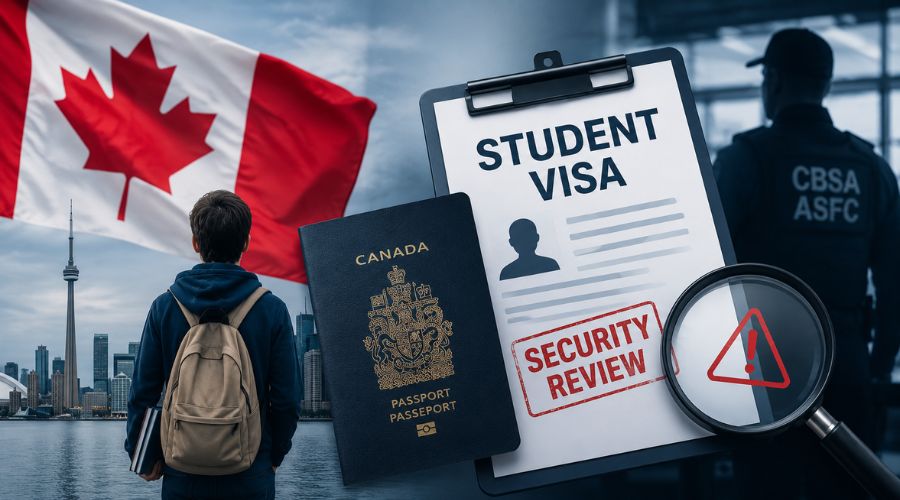
Canada’s international student program is facing renewed scrutiny after reporting on a classified Canada Border Services Agency (CBSA) intelligence assessment revealed a dramatic increase in criminal charges involving some Indian nationals who entered Canada on study permits.

The report has also triggered strong political criticism from Conservative MP Michelle Rempel Garner, who has raised concerns about organized crime, immigration enforcement and the treatment of non-citizens convicted of serious offences.

For prospective international students, however, the issue needs to be understood carefully. The findings concern a subset of study-permit holders and should not be interpreted as suggesting that international students generally are involved in criminal activity.

What Does the CBSA Report Say?

According to reporting by Global News on a classified CBSA intelligence document concerning the Bishnoi gang, criminal charges involving Indian study-permit holders increased by 8,800% between 2016 and 2024.

The CBSA assessment reportedly identified India as the leading source country among foreign students charged with crimes.

Between 2019 and 2023, approximately 4,000 Indian citizens who had entered Canada on study permits were charged with 17,929 offences. The report said about 4,920 of those charges were considered serious or organized-crime related, with 97% of those offences categorized as violent.

The report also stated that in 2024, more than 13,040 criminal charges were laid against Indian citizens in Canada who were on study visas. Global News reported that 2,418 people were represented in those 2024 figures.

These numbers have attracted significant attention because of concerns that organized criminal groups may have exploited Canada’s international student system.

Concerns About Organized Crime and Student Visas

The CBSA intelligence assessment reportedly focused on the expansion of India’s Bishnoi gang in Canada.

According to the report, investigators increasingly identified Indian foreign nationals holding study and work permits among people involved in organized criminal activities connected to the gang.

One example highlighted in the reporting involved Goldy Brar, a senior Bishnoi associate who entered Canada in 2017 on a student visa. The CBSA assessment reportedly described how the gang subsequently recruited young people in Canada to participate in criminal activities.

The report does not establish that Canada’s international student population as a whole is connected to organized crime. Rather, it identifies specific cases and trends that Canadian authorities believe warrant greater scrutiny.

That distinction is important for students, parents and education advisers.

Michelle Rempel Garner Calls for Stronger Action

The CBSA findings have prompted Conservative MP Michelle Rempel Garner to call for stronger action against serious crimes committed by non-citizens.

In August 2026, Rempel Garner publicly criticized what she described as overly lenient sentences for some non-citizens convicted of violent offences and argued that Canada’s immigration and criminal justice systems need stronger enforcement mechanisms. Global News reported her comments following the publication of its investigation into the CBSA assessment.

She has also previously supported legislative changes aimed at preventing immigration status from influencing sentencing decisions in ways that could potentially affect deportation outcomes.

However, there is an important legal nuance.

Can Immigration Consequences Be Considered When Someone Is Sentenced?

Canadian sentencing law is more complicated than the political debate may suggest.

The Supreme Court of Canada ruled in R. v. Pham that courts can consider immigration-related consequences when determining an appropriate sentence, provided the sentence remains consistent with fundamental sentencing principles such as proportionality and parity.

Legal scholars have argued that this does not create a separate criminal justice system for non-citizens. Instead, immigration consequences can form part of the circumstances considered by a sentencing judge when determining an appropriate sentence.

This is why claims that judges routinely issue reduced sentences specifically so that criminals can avoid deportation should be treated as a political and legal controversy, rather than as an established conclusion from the CBSA report.

Why Is This Important for Future International Students?

The latest controversy comes at a time when Canada has already significantly tightened its international student system.

Over the past several years, Canada has introduced measures designed to reduce the number of temporary residents, strengthen oversight of institutions and make the study-permit system more controlled.

The government introduced a national study-permit cap in 2024, and Canada’s study-permit environment has become considerably more selective than it was during the rapid expansion of international education in the early 2020s. Parliamentary evidence has also documented a reduction in the number of study-permit holders following the introduction of the cap.

The latest CBSA revelations could add further pressure for stronger screening and compliance measures.

For genuine students, this means that choosing a legitimate institution, providing accurate documentation and demonstrating a genuine purpose of study are increasingly important.

What Should Students Do?

International students should not assume that the recent news means Canada is closing its doors to legitimate students.

Instead, applicants should focus on following Canada’s immigration requirements carefully.

1. Choose a legitimate institution

Students should select an eligible Canadian educational institution and verify that the program and institution meet current study-permit requirements.

2. Provide genuine documentation

Financial documents, academic records, admission documents and other information submitted with a study-permit application must be accurate and authentic.

Fraudulent documents or misleading information can result in serious immigration consequences.

3. Demonstrate a genuine study purpose

Applicants should be able to clearly explain why they selected their institution and program and how the education fits their academic or career plans.

4. Follow study-permit conditions

Once in Canada, students must comply with the conditions attached to their study permit and maintain their eligibility to study.

5. Stay away from criminal activity

A study permit is temporary immigration status—not immunity from Canadian law.

Students are expected to obey Canadian laws, and criminal activity can have consequences for both their criminal case and their immigration status.

Will This Affect Canada’s Student Visa Program?

It is too early to say exactly what additional policy changes may follow from the latest CBSA revelations.

However, the report could strengthen calls for:

  • More rigorous screening of study-permit applicants
  • Greater monitoring of immigration fraud
  • Stronger cooperation between immigration authorities and law-enforcement agencies
  • Better oversight of educational institutions
  • Stronger action against organized crime
  • More effective enforcement against non-citizens convicted of serious crimes

At the same time, policymakers will need to balance security measures with Canada’s longstanding goal of attracting genuine international students.

A Message for Genuine Students

The most important takeaway is that criminal activity involving a small subset of temporary residents should not be confused with the millions of legitimate international students who use Canada’s education system for academic and career development.

Canada remains an important destination for international education, but the immigration environment is becoming more carefully regulated.

For students considering Canada in 2026 and beyond, preparation matters more than ever. Applicants should understand current study-permit requirements, choose their institution carefully, prepare complete documentation and seek professional guidance when necessary.

The recent CBSA revelations demonstrate why Canada is placing greater emphasis on security, compliance and integrity within its immigration system.

For genuine students, following the rules and maintaining valid immigration status remain the foundation of a successful study experience in Canada.

Read More

July 24, 2026

The European Union has issued a major warning to five Caribbean countries over their Citizenship-by-Investment, or “Golden Passport,” programs. If these countries fail to meet the EU’s requirements, their citizens could lose visa-free access to the Schengen Area in the future.

But what does this really mean? Which countries are affected? Will current passport holders lose their travel privileges immediately? And could this impact international students or future investors?

Let’s break everything down in simple terms.

What Has Happened?

The European Union has officially warned five Caribbean nations that they could face the suspension of their visa-free access to the Schengen Area if they continue operating their Citizenship-by-Investment (CBI) programs without significant reforms.

The EU believes that these programs may create security risks because they allow foreign investors to obtain citizenship without establishing a genuine connection to the country.

It is important to understand that this is not an immediate ban. Instead, the EU has proposed a transition period during which these countries can reform or phase out the programs.

Which Five Countries Are Affected?

The countries currently involved are:

  • Antigua and Barbuda
  • Dominica
  • Grenada
  • Saint Kitts and Nevis
  • Saint Lucia

These five nations are well known for offering Citizenship-by-Investment programs, allowing eligible foreign investors to obtain citizenship after making approved investments in real estate, government funds, or other qualifying projects.

One of the biggest attractions of these passports has always been visa-free access to many countries, including the Schengen Area.

That benefit is now under review.

Why Is the European Union Concerned?

According to the European Commission, Citizenship-by-Investment programs may pose several risks if not properly managed.

These concerns include:

  • Weak background screening
  • Money laundering risks
  • Financial crime
  • Potential misuse by individuals seeking easier access to Europe
  • Limited physical residency requirements before citizenship is granted

The EU argues that citizenship should reflect a genuine connection to a country, rather than simply being available through financial investment.

Because Schengen countries allow free movement across much of Europe, the EU wants stronger safeguards before continuing visa-free agreements.

What Could Happen Next?

The important thing to remember is that nothing changes today.

Citizens of these five Caribbean countries continue to enjoy visa-free access to the Schengen Area under the current rules.

However, if the countries do not satisfy the EU’s concerns within the proposed transition period, the European Union could suspend that visa-free arrangement in the future.

If that happens, passport holders would need to apply for a Schengen visa before traveling to participating European countries.

This would make travel more expensive, more time-consuming, and less convenient.

What Does This Mean for Investors?

Many investors have chosen Caribbean citizenship because it offers:

  • A second passport
  • Global mobility
  • Faster international travel
  • Business opportunities
  • Family security

If Schengen visa-free access is eventually removed, one of the strongest selling points of these passports would become less attractive.

That does not mean Caribbean citizenship would lose all value, but it could influence future investment decisions.

Potential applicants should carefully monitor official developments before making any major financial commitments.

Does This Affect International Students?

This question is especially important for our viewers.

If you are planning to study in Europe using a student visa issued by a Schengen country, this announcement does not affect your study visa application.

Student visas follow completely different immigration rules.

Whether you hold a passport from one of these Caribbean countries or another country, you will still need to meet the admission and visa requirements of your chosen university and destination.

Similarly, students from countries like Bangladesh, India, Pakistan, Nepal, and many others who already require Schengen visas will see no immediate change because of this announcement.

Should Current Passport Holders Be Worried?

At this stage, there is no need for panic.

Current passport holders can continue traveling under the existing visa-free arrangements unless and until the EU formally changes its policy.

The discussions between the European Union and the Caribbean governments are ongoing.

Several of the affected countries have expressed their willingness to continue negotiations, while also defending the importance of their Citizenship-by-Investment programs to their national economies.

Any final decision will likely take time.

Why This Story Matters

This development highlights an important reality about global immigration.

Visa policies, investment migration programs, and international travel rules are constantly evolving.

A passport that offers certain travel benefits today may not provide exactly the same advantages several years from now.

That is why anyone considering investment migration, second citizenship, or international education should always rely on official information rather than advertisements or social media claims.

Conclusion

The European Union has warned Antigua and Barbuda, Dominica, Grenada, Saint Kitts and Nevis, and Saint Lucia that their visa-free access to the Schengen Area could be suspended if they fail to reform their Citizenship-by-Investment programs.

There is no immediate suspension, and visa-free travel remains in place for now. The coming months and years will determine whether these countries reach an agreement with the EU or face changes to their travel privileges.

If you’re interested in studying abroad, immigration updates, student visas, scholarships, or the latest global travel policies, make sure you stay informed with Schooling Visa.
Read More

September 19, 2025

For international professionals looking to enhance their leadership skills and experience U.S. academic and cultural life, the Hubert H. Humphrey Fellowship Program is one of the most prestigious opportunities available. Applications are now open for the 2026–27 academic year, inviting talented young and mid-career professionals from around the globe to study in the United States for 10 months of non-degree graduate-level education and professional development.

Launched in 1978 to honor U.S. Senator and Vice President Hubert H. Humphrey, the fellowship is part of the Fulbright exchange programs funded by the U.S. government. Over the years, it has built a reputation for empowering professionals who are committed to public service and leadership in their fields.

Why the Humphrey Fellowship Matters

Unlike traditional scholarships, this fellowship is not degree-based. Instead, it focuses on professional growth, leadership development, and collaboration. Fellows gain firsthand exposure to U.S. society, culture, and institutions, while sharing their own expertise and perspectives with Americans and other global participants.

The program acts as a platform for building long-term international partnerships, helping participants return to their home countries with new insights and stronger networks to drive change.

Fellowship Benefits

The Humphrey Fellowship is fully funded and covers a wide range of expenses, ensuring participants can focus entirely on their professional and academic journey. Benefits include:

  • Full tuition and fees at the host university in the U.S.

  • Pre-academic English language training (if required).

  • Living allowance to cover accommodation and daily expenses.

  • One-time settlement allowance.

  • Accident and sickness insurance coverage.

  • Book and study materials allowance.

  • One-time computer purchase allowance.

  • International air travel to and from the U.S., plus domestic travel for required program events.

  • Professional development support, including conferences, field trips, and professional visits.

This makes the fellowship not only financially supportive but also rich in opportunities for practical learning and career advancement.

Eligible Fields of Study

The Humphrey Fellowship supports professionals working in areas that contribute to human development and global progress. Key fields include:

  • Human and institutional capacity building

  • Rights and freedoms

  • Sustainable lands and thriving communities

  • Public health and infectious diseases

  • Education administration and policy

  • Environmental management and climate action

Applicant Qualifications

While specific eligibility requirements may vary slightly by country, general criteria for applicants include:

  • A university degree equivalent to at least four years of full-time study.

  • A minimum of five years of full-time professional experience after completing a university degree.

  • Demonstrated leadership qualities and a strong commitment to public service.

  • Proficiency in English, with a valid TOEFL score.

  • Applicants should not have extensive recent U.S. experience (no graduate study or long-term stays in the U.S. within the past 5–7 years).

  • Commitment to return to their home country after the fellowship to share knowledge and contribute to development.

Special note: For applicants in academia, only university teachers or researchers with management experience are considered, except for those teaching English as a foreign language.

Global Reach of the Program

Every year, hundreds of professionals from Asia, Africa, the Middle East, Europe, and Latin America are selected through a competitive process. This diverse cohort creates an environment where fellows learn not just from the United States but from each other, enriching the global exchange of knowledge.

How to Apply

Applications are managed through an online system hosted by the Institute of International Education (IIE). Steps typically include:

  1. Create an IIE account to access the official application form.

  2. Carefully follow the instructions for completing the form, including uploading required documents such as transcripts, CV, recommendation letters, and proof of English proficiency.

  3. Submit the application by the deadline announced by the U.S. Embassy or Fulbright Commission in your home country.

For detailed information, applicants should check with the U.S. Embassy or Fulbright Commission in their country, as deadlines and requirements may vary.

Final Thoughts

The Humphrey Fellowship Program is more than just an academic exchange—it’s a career-transforming experience. By bringing together talented professionals from around the world, the program fosters leadership, cultural exchange, and long-term collaboration.

If you are a professional dedicated to making a difference in your field and your community, this fellowship could be the next big step in your journey.

🌍 Applications for 2026–27 are now open. Don’t miss the chance to study, grow, and lead through the Humphrey Fellowship in the United States.

Read More

September 4, 2025

The Chevening Scholarship is one of the most prestigious and fully funded scholarships in the UK, attracting future leaders, professionals, and change-makers from around the globe. Funded by the UK government’s Foreign, Commonwealth and Development Office (FCDO) and partner organizations, Chevening offers students a chance to pursue a one-year master’s degree at top UK universities.

What is the Chevening Scholarship?

Chevening is a global scholarship program available to applicants from over 160 countries and territories worldwide. Every year, around 1,500 scholarships are awarded, making it one of the largest and most influential scholarship programs in the world.

The scholarship covers all major costs, including:

  • Full tuition fees

  • Airfare to and from the UK

  • Accommodation allowance

  • Monthly stipend for living expenses

  • Additional allowances for books, research, and visa fees

This makes Chevening a completely free scholarship opportunity for students to study at world-class universities across the UK.

Why is Chevening So Popular?

Global Perspective
  • Over 50,000 alumni worldwide have benefited from Chevening since it was launched in 1983.

  • Scholars are part of a powerful international network of leaders across politics, business, media, law, healthcare, and more.

  • The program emphasizes leadership, networking, and impact on society, not just academic excellence.

Bangladeshi Perspective
  • More than 450 Bangladeshi students have studied in the UK through Chevening.

  • It is especially popular among professionals from development organizations, health, legal fields, media, and government sectors.

  • The scholarship has helped Bangladeshi students strengthen their leadership skills and return home to contribute to national development.

Eligibility Criteria

To apply for the Chevening Scholarship, you must meet these requirements:

  1. Educational Qualification

    • A minimum of a second-class undergraduate degree (or equivalent).

  2. Work Experience

    • At least two years (2,800 hours) of professional experience.

    • Includes full-time, part-time, volunteer roles, internships (paid or unpaid).

  3. English Language Requirement

    • Minimum IELTS 6.5 (or equivalent test score such as TOEFL or PTE).

  4. Leadership Potential

    • Demonstrated leadership, networking ability, and community impact.

  5. Commitment to Return

    • Scholars must return to their home country and work for a minimum of two years after completing their studies.

Who Gets the Chevening Scholarship?

Globally, recipients come from diverse fields, including:

  • Government and public service

  • Non-Governmental Organizations (NGOs)

  • Healthcare and legal professions

  • Media and journalism

  • Private sector leadership roles

🔹 In Bangladesh, professionals from development organizations, youth forums, health sectors, and law are common recipients, though academics and journalists are also selected.

Application Process

The Chevening application is made entirely online via the official website (chevening.org).

  1. Online Application

    • Fill in personal, academic, and professional details accurately.

  2. Required Documents

    • Valid passport/national ID

    • Academic certificates and transcripts

    • Two reference letters in English

    • English language proficiency proof (IELTS 6.5 or equivalent)

  3. University Applications

    • Apply to at least three different UK universities.

    • Must secure an unconditional offer letter from at least one before the final selection.

  4. Interview

    • Shortlisted applicants attend an interview at the UK Embassy/High Commission in their country.

  5. Final Selection

    • Successful candidates are awarded the scholarship and start their UK studies in September/October 2026.

Key Tips for Applicants

  • Be honest and accurate in your application.

  • Highlight your leadership roles, networking skills, and community impact.

  • Show how your UK education will benefit your home country and society.

  • Involvement in co-curricular and voluntary activities strengthens your profile.

  • Read the guidelines carefully on the Chevening website before applying.

Important Dates for Chevening 2026-27

  • Applications Opened: 2025

  • Application Deadline: October 7, 2025

  • Interviews: Early 2026

  • Final Selection: Mid-2026

  • Courses Start: September/October 2026

Final Thoughts

The Chevening Scholarship 2026-27 is not just financial support; it is a life-changing opportunity for students worldwide. Whether you are from Bangladesh, Asia, Africa, Europe, or Latin America, Chevening offers you the chance to study at top UK universities, develop leadership skills, and become part of an elite global network.

With the deadline approaching on October 7, 2025, now is the time to prepare your application, polish your leadership story, and take a step towards becoming a global change-maker.

Read More

August 30, 2025

Are you an aspiring leader seeking a world-class education in one of the most influential countries in the world? The Schwarzman Scholars Program at Tsinghua University, Beijing, offers a unique opportunity for outstanding students from across the globe to pursue a fully funded one-year postgraduate degree in China.

This prestigious program brings together future leaders in politics, business, science, and society, helping them build international networks and gain insights into China’s role in global affairs.

About Tsinghua University and the Schwarzman Scholars Program

Founded in 1911, Tsinghua University is consistently ranked among the top universities in China and the world. It is especially renowned for its strong academic programs in science, engineering, social sciences, arts and humanities, medicine, and business studies.

The Schwarzman Scholars Program was established to prepare the next generation of global leaders by offering them an immersive educational experience in China. Scholars engage in rigorous academic training, cultural exchange, and professional networking.

Benefits of the Scholarship

Selected candidates for the 2025 Schwarzman Scholars Program will receive a fully funded package, which includes:

  • ✅ Full tuition fees for the program

  • ✅ Round-trip airfare to and from Beijing

  • ✅ Monthly stipend to cover living and incidental expenses

  • ✅ Textbook allowance

  • ✅ Comprehensive health insurance

  • ✅ Travel allowance for study tours and program activities

This ensures that scholars can focus on their studies and leadership development without financial stress.

Eligibility Criteria

To apply, candidates must:

  • Hold a bachelor’s degree (or equivalent) in any field of study (science, engineering, arts, literature, social sciences, medicine, business, etc.).

  • Demonstrate strong academic performance and leadership potential.

  • Be proficient in English (IELTS or equivalent test scores required).

  • Be motivated to contribute to global leadership and cross-cultural understanding.

Required Documents

Applicants must submit the following documents as part of their online application:

  • Curriculum Vitae (CV)

  • Completed Online Application Form

  • Academic transcripts from previous institutions

  • Three reference letters (academic or professional)

  • English proficiency test score (IELTS or equivalent)

  • Statement of Purpose (SOP)

  • Leadership Purpose Essay

  • Additional supporting documents (if applicable)

Application Process

  1. Prepare all required documents in advance.

  2. Complete the online application form on the Schwarzman Scholars official portal.

  3. Upload transcripts, essays, reference letters, and test scores.

  4. Submit before the deadline.

📌 Application Deadline: September 10, 2025

Early preparation is recommended, as competition is highly selective and applications are reviewed on both academic excellence and leadership potential.

Why Apply?

The Schwarzman Scholars Program is more than a scholarship—it is a gateway to global leadership opportunities. Scholars gain access to:

  • World-class professors and mentors at Tsinghua University

  • Cross-cultural learning with peers from over 100 countries

  • Networking opportunities with political leaders, entrepreneurs, and innovators

  • A deeper understanding of China’s role in global affairs

This program is ideal for students who aspire to make an impact in government, business, technology, social innovation, or academia.

Final Thoughts

The Schwarzman Scholars Program at Tsinghua University is one of the most prestigious postgraduate opportunities in the world. With its fully funded benefits, global networking, and leadership focus, it empowers young leaders to shape the future of international cooperation and innovation.

If you are a motivated student with a vision to lead and inspire, this scholarship could be your pathway to success.

👉 Apply online before September 10, 2025, and take the first step toward becoming part of a global community of future leaders.

Read More

August 27, 2025

If you are planning to pursue higher education in Japan, the Tokyo Global Partner Scholarship 2026 is a golden opportunity for you. Offered by Tokyo Metropolitan University (TMU), this fully funded scholarship allows international students to pursue Master’s and PhD programs in one of Japan’s most prestigious public research universities.

The program aims to enrich academic and research collaboration while supporting outstanding students from across the globe. Applications are now open for the 2026 intake, and interested candidates are encouraged to apply before the deadline.

About Tokyo Metropolitan University (TMU)

Founded in 1949, Tokyo Metropolitan University is a leading public research institution located in the heart of Tokyo, Japan’s capital. The university operates under the supervision of the Tokyo Metropolitan Government and is recognized for its strong focus on innovation, research, and global partnerships.

Currently, TMU hosts around 10,000 students, with a steadily growing number of international students joining its programs each year. Its modern facilities, highly qualified faculty, and diverse academic environment make it one of the best destinations for international scholars.

Benefits of the Tokyo Global Partner Scholarship

The Tokyo Global Partner Scholarship is a fully funded program, ensuring that students can focus on their education and research without financial burden. The key benefits include:

  • Full tuition fee waiver

  • Admission fee coverage

  • Round-trip airfare to and from Japan

  • Monthly stipend of 150,000 yen

  • Additional benefits as per the scholarship policy

This generous support makes it possible for international students to study in Japan with peace of mind while gaining access to world-class education.

Eligibility Criteria

To be considered for the Tokyo Global Partner Scholarship 2026, applicants must meet the following criteria:

  • For Master’s programs: A Bachelor’s degree is required.

  • For PhD programs: A Master’s degree is required.

  • Applicants may also be required to demonstrate work or research experience in an academic institution, government agency, or entrepreneurial organization.

Areas of Study

Students selected for this scholarship can enroll in one of the following schools and graduate programs at Tokyo Metropolitan University:

  • School of Human Health Sciences

  • School of Systems Design

  • School of Urban Environmental Sciences

  • Graduate School of Science

  • Graduate School of Management

  • Graduate School of Law and Politics

  • Graduate School of Humanities

Each school has multiple specialized departments, giving students a wide range of opportunities to pursue their academic interests.

Application Procedure

The application process for the Tokyo Global Partner Scholarship is handled directly by TMU. Interested candidates are encouraged to carefully review the application guidelines and submit the required documents before the deadline.

Detailed information about the application procedure, required forms, and submission process is available on the official scholarship portal of Tokyo Metropolitan University.

Application Deadline

The deadline to apply for the Tokyo Global Partner Scholarship 2026 is:

📅 October 10, 2025

Applicants are strongly advised to prepare their documents and apply early to avoid last-minute issues.

Why Choose Tokyo Global Partner Scholarship?

Studying at Tokyo Metropolitan University under this scholarship is not just about financial support—it is also about becoming part of a globally recognized academic network. Here’s why this scholarship stands out:

  • Fully funded benefits reduce financial stress.

  • Study in Tokyo, one of the world’s most vibrant and innovative cities.

  • Access to cutting-edge research facilities and experienced faculty.

  • Opportunities to build international networks and future career prospects.

  • A diverse and supportive student community.

Final Thoughts

The Tokyo Global Partner Scholarship in Japan 2026 is one of the best opportunities for international students looking to pursue Master’s or PhD programs in Japan. With its generous funding, diverse academic offerings, and strong global outlook, TMU provides the perfect environment to advance your education and research.

If you aspire to build a strong academic and professional career in Japan, don’t miss this chance. Start preparing your application today and take a step closer to becoming part of Tokyo Metropolitan University’s vibrant academic community.

Read More

July 27, 2025
July 27, 2025

Germany continues to stand out as one of the leading countries for higher education and world-class research. For those aspiring to advance their academic careers through global exposure, the Max Planck Docket Scholarship 2026 presents a prestigious and fully funded opportunity to work in one of the world’s top research institutions — the Max Planck Society.

This unique program offers young researchers the chance to collaborate with world-renowned scholars in a high-caliber academic environment, particularly focusing on the history of colonial law.

Program Overview

The Max Planck Society is globally respected for its pioneering research in the sciences and humanities. With this scholarship, selected candidates will spend three months — from January 5 to March 31, 2026 — conducting research at one of its renowned institutes in Germany.

This program is not only academically enriching but also financially supportive. It is a fully funded opportunity aimed at helping international researchers thrive without the burden of financial constraints.

What the Scholarship Covers

The Max Planck Docket Scholarship 2026 includes a comprehensive support package:

  • ✅ Living Expenses Allowance

  • ✈️ Travel Expenses (to and from Germany)

  • 🏡 Accommodation Fees

  • 🧪 Research Costs

This makes it possible for scholars to fully focus on their research goals and academic contributions while enjoying the rich cultural and academic environment of Germany.

Max Planck Scholarship 2026 – Fully Funded

Eligibility Criteria

To be considered for the scholarship, applicants must meet the following criteria:

  • Open to All Nationalities: Students and researchers from any country are welcome to apply.

  • Outside Frankfurt Residency: Candidates must reside outside of Frankfurt, Germany.

  • Preference for Latin American Applicants: Special consideration will be given to candidates from Latin America.

  • Research Topic: Applicants must propose a research project centered on the history of colonial law.

  • Language Requirement: Applications must be written in English or Spanish.

Required Application Documents

Applicants must prepare the following documents for submission:

  • Curriculum Vitae (CV)

  • Project Description (focused on colonial law)

  • Motivation Letter (expressing academic goals and interest in the program)

These documents should clearly demonstrate the applicant’s academic background, research capabilities, and alignment with the goals of the Max Planck program.

Application Deadline

  • Deadline to Apply: September 15, 2025

Early applications are encouraged due to the competitive nature of the program. There is no application fee, making this opportunity even more accessible to young scholars globally.

Why the Max Planck Society?

  • World-Renowned Research: Ranked among the best research institutions globally.

  • Interdisciplinary Collaboration: Opportunity to engage with experts from various academic fields.

  • Global Network: Join an elite group of scholars, scientists, and thinkers from around the world.

  • Cultural Exchange: Experience Germany’s vibrant academic and cultural landscape.

Final Thoughts

The Max Planck Docket Scholarship 2026 is more than just a funding opportunity — it is a gateway to academic growth, cultural exchange, and global collaboration. If you are a young researcher with a passion for legal history and a drive to work with world-class mentors, this is your chance to bring your research to the international stage.

Read More

July 10, 2025

For many students across the world, especially in developing nations, studying abroad remains a dream hindered by financial limitations. However, that dream could soon become a reality thanks to Saudi Arabia’s announcement of 700 fully funded scholarships for international students. This groundbreaking initiative offers a gateway to world-class education, research opportunities, and cultural exchange — all fully supported by the Saudi government.

From tuition to accommodation, travel to healthcare, the scholarship covers every essential aspect of a student’s academic journey, making it one of the most generous programs available in the Middle East.

Why Study in Saudi Arabia?

Saudi Arabia has rapidly evolved into a major hub for higher education in the Arab world. With state-of-the-art infrastructure, global research initiatives, and a clear vision under its Vision 2030 strategy, the Kingdom is actively attracting top international talent to its universities.

Under this scholarship scheme, students can pursue Bachelor’s, Master’s, and PhD programs at over 25 public universities across the country. The government aims to strengthen cultural exchange and academic excellence by bringing together students from all over the world — including Bangladesh, Pakistan, India, Nigeria, the Philippines, and beyond.

Participating Universities

The scholarship program is offered by a range of prestigious public universities in Saudi Arabia, including:

  • King Saud University

  • King Abdulaziz University

  • King Fahd University of Petroleum & Minerals

  • Umm Al-Qura University

  • Imam Muhammad Ibn Saud Islamic University

  • Princess Nourah Bint Abdulrahman University

  • Imam Abdulrahman Bin Faisal University

  • King Faisal University

  • King Khalid University

  • University of Jeddah

  • Taibah University

  • Northern Border University

  • University of Hafr Al-Batin

These institutions are known for their diverse academic offerings, international research collaborations, and modern campuses.

Fields of Study

Scholarships are available in a wide variety of academic fields including:

  • Engineering & Technology

  • Computer Science, AI, and Cybersecurity

  • Natural Sciences (Physics, Chemistry, Biology)

  • Health & Medical Sciences

  • Business, Economics & Management

  • Social Sciences and Humanities

  • Arabic & Islamic Studies

  • Agriculture and Environmental Science

  • Education and Teaching

Programs are offered in both Arabic and English, depending on the institution and course selection.

Scholarship Benefits

This scholarship is fully funded by the Saudi government and includes the following benefits:

  • Monthly stipend:

    • SAR 900 for Science students

    • SAR 850 for Humanities students

  • Round-trip airfare to and from Saudi Arabia

  • Free university housing or fully furnished apartment for married students

  • Comprehensive health insurance

  • Local transportation allowance

  • Arrival allowance and orientation support

  • Opportunity to perform Umrah during the study period

  • Research support and access to university laboratories

  • No tuition fees at any stage of the study

These comprehensive benefits ensure students can study without financial worry and live comfortably throughout their academic journey.

Eligibility Criteria

To qualify for the scholarship, applicants must meet the following criteria:

  • Must be a citizen of any country outside Saudi Arabia

  • For Master’s degree: age must not exceed 30 years

  • For PhD programs: age must not exceed 35 years

  • Must not have a criminal record or be involved in any disciplinary misconduct

  • Must apply to only one university under this scholarship scheme

  • Must meet the academic and language requirements of the university and program

  • A valid passport (minimum 6 months) is required

Some universities may require an IELTS or TOEFL score for English-taught programs.

Required Documents

Applicants typically need to submit:

  • Valid passport copy

  • Academic transcripts and certificates

  • Medical fitness certificate

  • Statement of Purpose or Motivation Letter

  • Letters of Recommendation (for postgraduates)

  • Research proposal (for PhD candidates)

  • Recent photographs

  • Language proficiency test results (if applicable)

All documents should be uploaded on the respective university’s online application portal. Ensure all documents are scanned clearly and, if required, officially translated into Arabic or English.

Application Timeline

  • Bachelor’s Degree Applications: May 1 to June 14, 2025

  • Master’s and PhD Applications: May 1 to October 31, 2025

Deadlines may vary slightly between universities. Early preparation is advised to gather documents and avoid last-minute errors.

Visa and Post-Arrival Facilities

Upon receiving an admission offer, successful candidates will apply for a long-term student visa. This visa may also allow students to bring dependents (such as spouses and children) and undertake part-time work, depending on university policy and visa rules.

After arriving in Saudi Arabia, students will receive:

  • Airport reception

  • Student ID and campus orientation

  • Accommodation setup

  • Access to university libraries, labs, and career services

  • Invitations to cultural and academic events

The experience offers not just academic growth but also personal and professional development in a culturally rich and safe environment.

Tips for a Strong Application

  • Start preparing early and research the universities offering your desired program

  • Draft a strong personal statement and research proposal (for postgraduates)

  • Ensure all documents are accurate, translated, and verified

  • Highlight your academic achievements, goals, and motivation

  • Focus on how your education in Saudi Arabia will benefit your home country

  • If possible, connect with alumni or current students via university social media platforms

Final Thoughts

Saudi Arabia’s 700 fully funded international scholarships are more than just a study opportunity — they are a life-changing pathway to excellence. From tuition to accommodation, research support to cultural immersion, every part of the journey is carefully designed to empower students from across the globe.

With the deadline approaching fast, this is the perfect time to take your first step toward a brighter academic future.

Apply now. Dream big. Study in Saudi Arabia.

Read More

May 5, 2025

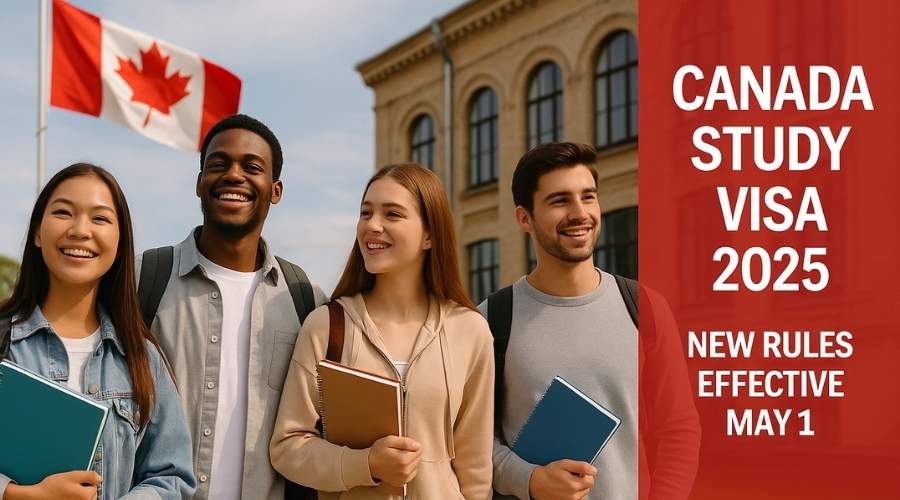
As of May 1, 2025, international students hoping to study in Canada will face a new set of visa requirements introduced by the Canadian government. These sweeping changes are designed to curb the rapid growth of student visa approvals, ensure international students are financially and academically prepared, and relieve pressure on Canada’s housing and public services.

If you’re planning to study in Canada, here’s everything you need to know about the latest reforms:

🎯 1. Cap on Study Permits: 437,000 Limit for 2025

Canada has implemented a national cap of 437,000 study permits for 2025, which is 10% lower than 2024. The number of permits is being distributed across provinces and territories, with each region responsible for issuing an attestation letter confirming the applicant is within their quota.

What This Means: Applicants must now secure an attestation letter before applying for a study permit—making early application and strategic choice of institution even more critical.

📜 2. Attestation Letters Become Mandatory

Whether you’re applying for a college diploma, university degree, or postgraduate study, all students must now submit a Provincial or Territorial Attestation Letter (PAL).

Tip: Your Designated Learning Institution (DLI) should guide you through this process, but getting in early is vital due to limited quota spots.

💰 3. Increased Financial Requirements

To prevent financial hardship among students, Canada has raised the minimum proof of funds requirement. Students must now show they have enough money to cover:

  • One year of tuition

  • Living expenses (more than previous years)

  • Return travel costs

Advice: Be prepared to show solid bank statements or other credible proof of financial support.

🎓 4. Stricter Post-Graduation Work Permit (PGWP) Rules

The Post-Graduation Work Permit program is now stricter:

  • Students must meet language requirements (CLB 7 for university, CLB 5 for college)

  • Graduates from public-private partnership colleges are no longer eligible

  • Master’s students (even from one-year programs) now qualify for 3-year PGWPs

Impact: This increases opportunities for master’s students, but limits pathways for those in certain programs or schools.

🕒 5. More Off-Campus Work Time – 24 Hours/Week

International students can now work up to 24 hours per week off-campus during academic sessions (increased from 20 hours). This provides some relief in covering living costs but is still restricted to ensure students focus on their studies.

💼 6. Spousal Open Work Permits – Tighter Rules

Previously, spouses of most international students could obtain open work permits. Now, only students in:

  • Master’s or Doctoral programs

  • Certain professional degrees

  • Designated pilot programs

are eligible to bring their spouses on open work permits.

Effect: This change may affect family planning and discourage some applicants with dependents.

🚫 7. Removal of Expedited Student Visa Streams

Canada has cancelled Student Direct Stream (SDS) and Nigeria Student Express, which previously allowed for faster visa processing for eligible applicants.

Result: Expect longer processing times and increased competition.

📌 Final Thoughts: Is Canada Still Worth It?

Despite the tighter regulations, Canada remains one of the most attractive destinations for international students—with world-class education, post-study work opportunities, and a pathway to permanent residency.

However, it’s more important than ever to:

  • Apply early

  • Choose DLIs and programs wisely

  • Meet the updated financial and academic standards

These changes are about quality over quantity—and if you’re well-prepared, Canada still offers a fantastic educational and career journey.

Read More

December 9, 2024
December 9, 2024

Are you planning a trip to Europe? Great news for Bangladeshi travelers! Starting December 10, 2024, the Swedish Embassy in Dhaka will process Schengen visa applications for Belgium, Finland, Iceland, Latvia, Luxembourg, Netherlands, Poland, Slovenia, and Sweden. This new arrangement, in partnership with VFS Global, is set to make the visa process smoother and more efficient for applicants.

What is VFS Global?

VFS Global is a visa and passport administration outsourcing company for governments and diplomatic missions. VFS Global is the world’s largest visa outsourcing and technology services specialist for governments and diplomatic missions worldwide.

What’s New?

From December 17, 2024, all Schengen visa applicants must book an appointment with VFS Global Sweden in Dhaka. The walk-in system will no longer be available.

This change aims to reduce waiting times, ensure a more organized process, and provide applicants with a better overall experience.

Step-by-Step Guide to Applying

  1. Identify Your Main Destination:
    Ensure your primary travel purpose is for one of the nine countries (Belgium, Finland, Iceland, Latvia, Luxembourg, Netherlands, Poland, Slovenia, or Sweden).
  2. Schedule an Appointment:
    • Visit the VFS Global portal to book your appointment.
    • A service fee will be charged at the time of booking.
    • The fee is non-refundable if you fail to attend the appointment or cancel less than 24 hours in advance.
  3. Prepare Your Documents:
    Collect all necessary paperwork, including your passport, completed application form, photos, travel itinerary, proof of accommodation, travel insurance, and financial statements.
  4. Attend Your Appointment:
    Visit the VFS Global center in Dhaka at your scheduled time with all required documents.

Why This Update Matters

This centralized system at the Swedish Embassy simplifies the visa application process, saving applicants the hassle of dealing with multiple embassies for different European destinations. It’s a step forward in making European travel more accessible for Bangladeshis.

Need Help?

For inquiries, the VFS Helpdesk is ready to assist:
📞 Phone: (+88) 09606 777 333 or (+88) 09666 911 382
🕒 Operating Hours: Sunday to Thursday, 9 AM to 5 PM (excluding public holidays).

Key Points to Remember

  • Walk-in visa applications are no longer accepted.
  • Appointments must be booked personally through VFS Global Sweden.
  • Service fees are non-refundable under certain conditions.

Conclusion

This new system is a game-changer for Bangladeshi travelers planning to visit Europe. With a streamlined process and centralized appointment system, applying for a Schengen visa is now more straightforward than ever.

Don’t miss out! Start preparing for your European journey today and ensure you book your appointment on time. ✈️

For updates and more information, stay connected with the Swedish Embassy and VFS Global. Europe is just a step away! 🌍
Read More