


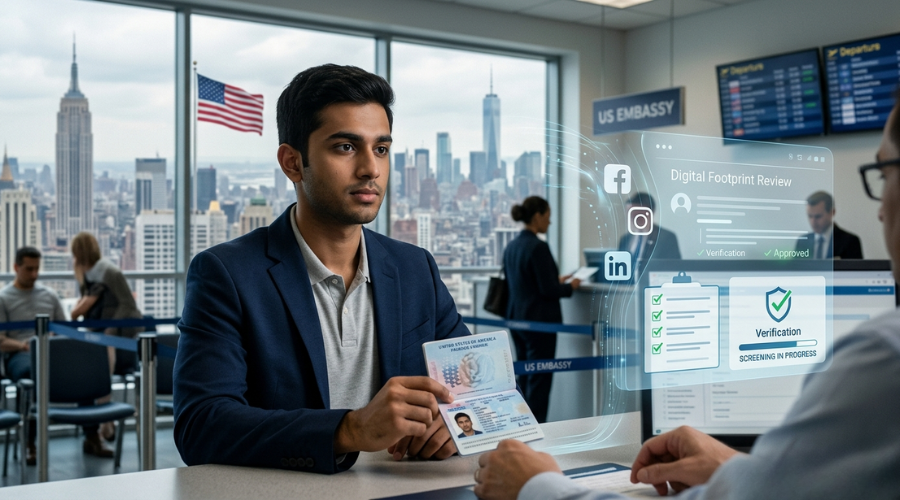
The United States has introduced a major transformation in its immigration system in 2026, expanding visa screening and vetting procedures to strengthen national security and improve decision-making accuracy. Following an official announcement by the U.S. Department of State, the new rules came into effect on March 30, 2026, marking a shift toward a more advanced, digital, and data-driven immigration process.
This reform reflects a growing need to adapt to modern challenges such as increasing application volumes, global mobility, and the influence of digital identity. Unlike previous systems that relied heavily on submitted documents, the new approach evaluates applicants more holistically—combining paperwork, background checks, and online presence into a unified assessment.
Understanding the Reform: Why It Matters
The 2026 update is not just a procedural change but a structural upgrade in how visa applications are evaluated. In recent years, authorities identified gaps where traditional screening methods were not sufficient to fully assess an applicant’s intent or credibility. As a result, the U.S. government has expanded its vetting system to ensure that all applicants are thoroughly reviewed before being granted entry.
The primary goal is to maintain openness while strengthening control—ensuring that individuals entering the United States meet both legal requirements and national security standards.
Expanded Visa Categories Under Screening
One of the most important changes is the expansion of enhanced vetting to a broader range of visa categories. Previously, stricter screening mainly applied to student visas (F, M, J) and employment-based visas like H-1B and their dependents. Under the new reform, many additional categories are now included, making the system far more comprehensive.
These newly included categories cover:
- Training and dependent visas such as H-3 and H-4
- Family-based visas including K-1, K-2, and K-3
- Religious and cultural visas like R-1, R-2, and Q
- Protection-based visas such as T, U, and S
- Domestic worker visas including A-3, G-5, and certain C-3 classifications
This expansion effectively creates a near-universal screening system across most nonimmigrant visa types, ensuring consistent evaluation standards for all applicants.
Mandatory Social Media Transparency
A defining feature of the 2026 reform is the introduction of mandatory social media transparency. Applicants are now required to make their online profiles accessible for review, highlighting the growing importance of digital identity in immigration decisions.
Authorities may examine:
- Posts, comments, and shared content
- Professional and educational information
- Social interactions and affiliations
In many cases, applicants are also expected to provide several years of social media history, including usernames and platforms used. This allows immigration officers to cross-check information and identify inconsistencies that may not appear in official documents.
This shift clearly shows that online behavior is now considered an extension of personal credibility.
Enhanced Security and Background Checks
In addition to digital transparency, the reform introduces deeper and more advanced background verification processes. These checks are designed to ensure that all applicants are properly vetted before entering the country.
Key improvements include:
- Multi-layer identity verification systems
- Cross-checking with international security databases
- Behavioral and intent analysis
The U.S. government emphasizes that every visa decision is a national security decision, reinforcing the principle that a visa is a privilege rather than a right. This approach strengthens the integrity of the immigration system while reducing potential risks.
Processing Times and Practical Impact
While the system is more advanced and efficient in design, the expansion of screening measures has practical implications for applicants. In some cases, additional checks may lead to longer processing times, particularly when applications require further review under administrative processing (commonly known as 221(g)).
Applicants may experience:
- Delays due to extended background verification
- Additional document requests
- Longer waiting periods for final decisions
However, it is important to note that well-prepared and transparent applications are more likely to move through the system smoothly, as the new framework is also designed to identify low-risk applicants more efficiently.
Impact on Students and Skilled Workers
The reform has a direct impact on international students, skilled workers, and other visa applicants, as the evaluation process now goes beyond basic eligibility.
For students applying under F, M, and J visas, authorities are placing greater emphasis on verifying genuine academic intent. This means that academic history, financial capability, and even online activity must align clearly with the purpose of study.
For skilled workers under programs such as H-1B and H-3, there is increased scrutiny of professional background, employer details, and job roles. Any inconsistency between documents and real-world information can raise concerns during evaluation.
Family-based and dependent visa applicants are also subject to the same level of scrutiny, reflecting a more standardized and uniform immigration system across all categories.
Why the USA Introduced These Changes
Several key factors contributed to the introduction of this reform. Rising global security concerns, increasing numbers of visa applications, and the rapid expansion of digital footprints have all made traditional screening methods less effective.
Additionally, the U.S. government aims to:
- Close gaps in previous vetting systems
- Prevent misuse of visa pathways
- Improve consistency and fairness in decision-making
- Strengthen public trust in immigration processes
By integrating technology and data analysis, the new system is better equipped to handle modern immigration challenges.
How to Prepare Under the New System
Adapting to the 2026 visa screening system requires careful preparation and attention to detail. Applicants should focus on maintaining consistency, transparency, and professionalism throughout the process.
Some essential steps include:
- Keeping social media profiles clean, accurate, and professional
- Ensuring all documents match personal and professional history
- Providing truthful and complete information in every application
- Applying early to account for possible delays
- Staying updated with the latest immigration policies
Taking these steps can significantly improve the chances of approval under the new, more rigorous system.
Final Insight
The 2026 visa screening reform marks a significant evolution in the U.S. immigration system, combining stricter security measures with advanced digital vetting to ensure only credible and well-prepared applicants are approved. While the United States continues to offer strong opportunities for students, workers, and families, the process now demands a higher level of transparency, accuracy, and consistency—both in documentation and online presence. Applicants who approach the system with honesty, thorough preparation, and a clear purpose will be best positioned to succeed, as immigration decisions increasingly rely on a complete and trustworthy profile rather than just paperwork alone.